

Section 1.1: The Great Yam Identity Crisis #
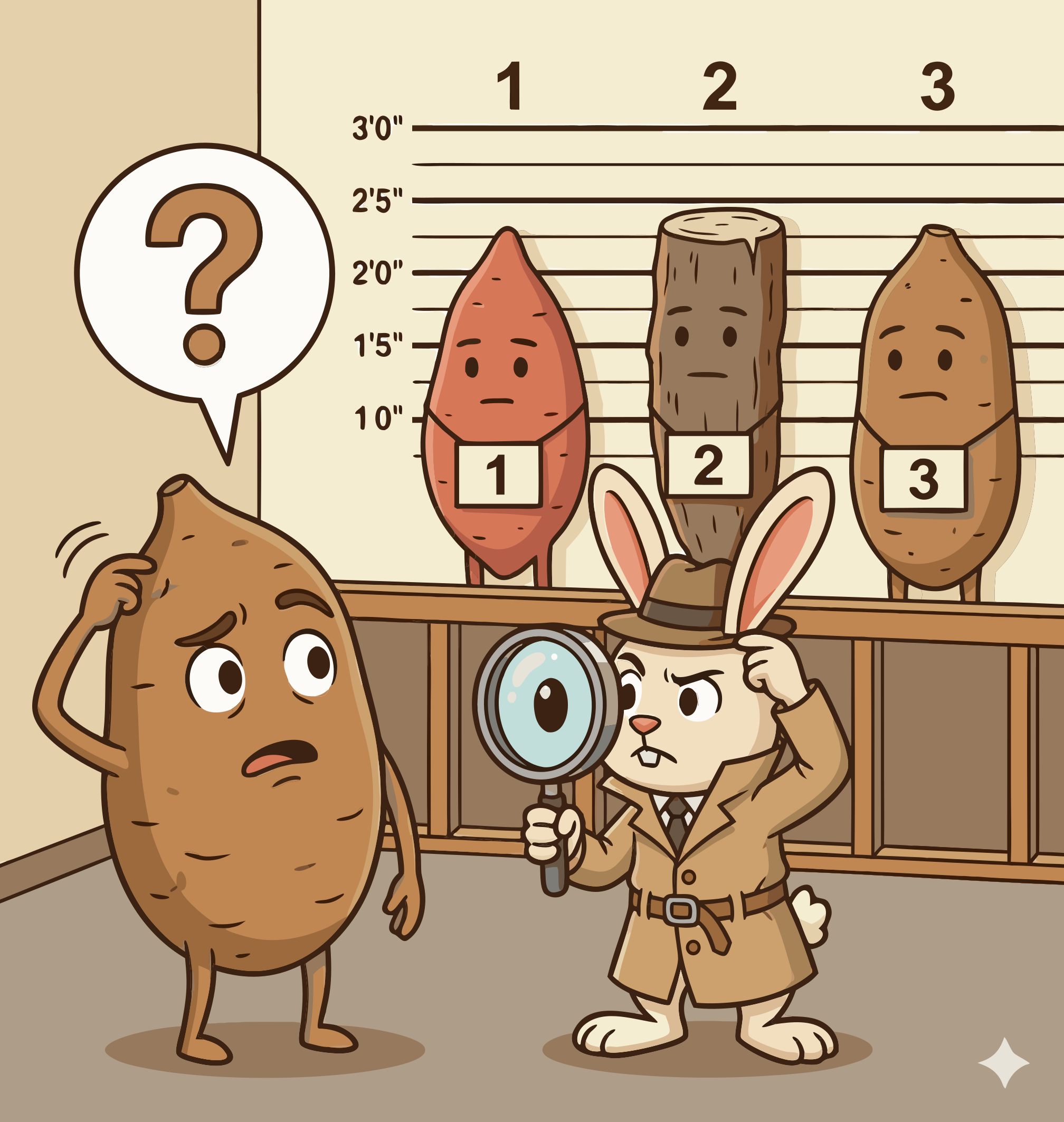
In West Africa, where true yams are a dietary staple for 300 million people, confusing Dioscorea with Ipomoea batatas (the sweet potato) is more than a linguistic slip—it’s an agricultural error. Applying sweet potato cultivation techniques to a true yam often results in crop failure. While the two appear similar in a grocery store aisle, their biological requirements are entirely different.
A Marketing Misnomer #
Key Information: The confusion between sweet potatoes and true yams in North America stems from a marketing campaign that used “yam” to describe orange-fleshed sweet potatoes.
This historical mislabeling created a persistent but incorrect belief that the two are interchangeable.
Two Different Families #
Botanical classification reveals the depth of this divide. True yams and sweet potatoes belong to distinct families with unique genetics and agricultural needs.
Key Information:
- True yams belong to the Dioscoreaceae family.
- Sweet potatoes (Ipomoea batatas) are members of the Convolvulaceae family, making them more closely related to morning glories than to true yams.
Because they are unrelated, the diseases and nutrient profiles of one rarely apply to the other.
Separate Continents of Origin #
Geography further distinguishes these plants. A plant’s origin dictates its climate preferences and soil requirements.
Key Information: True yams originated primarily in Africa and Asia, while sweet potatoes are native to the Americas.
True yams require the long, humid seasons of the tropics, whereas sweet potatoes tolerate a broader range of climates.
Nutritional and Scientific Distinctions #
Physical properties also set them apart, from their chemical makeup to their primary species.
Key Information:
- Sweet potatoes are typically higher in beta-carotene than true yams, which accounts for their characteristic orange color.
- The most commonly cultivated true yam species is Dioscorea rotundata, also known as the white Guinea yam.
Recognizing these traits is the first step toward accurate identification. Next, we’ll examine the physical markers that help distinguish these tubers at a glance.




 The term "yam" was historically used for marketing orange-fleshed sweet potatoes