

Section 2.1: Major Species and Where They Grow #
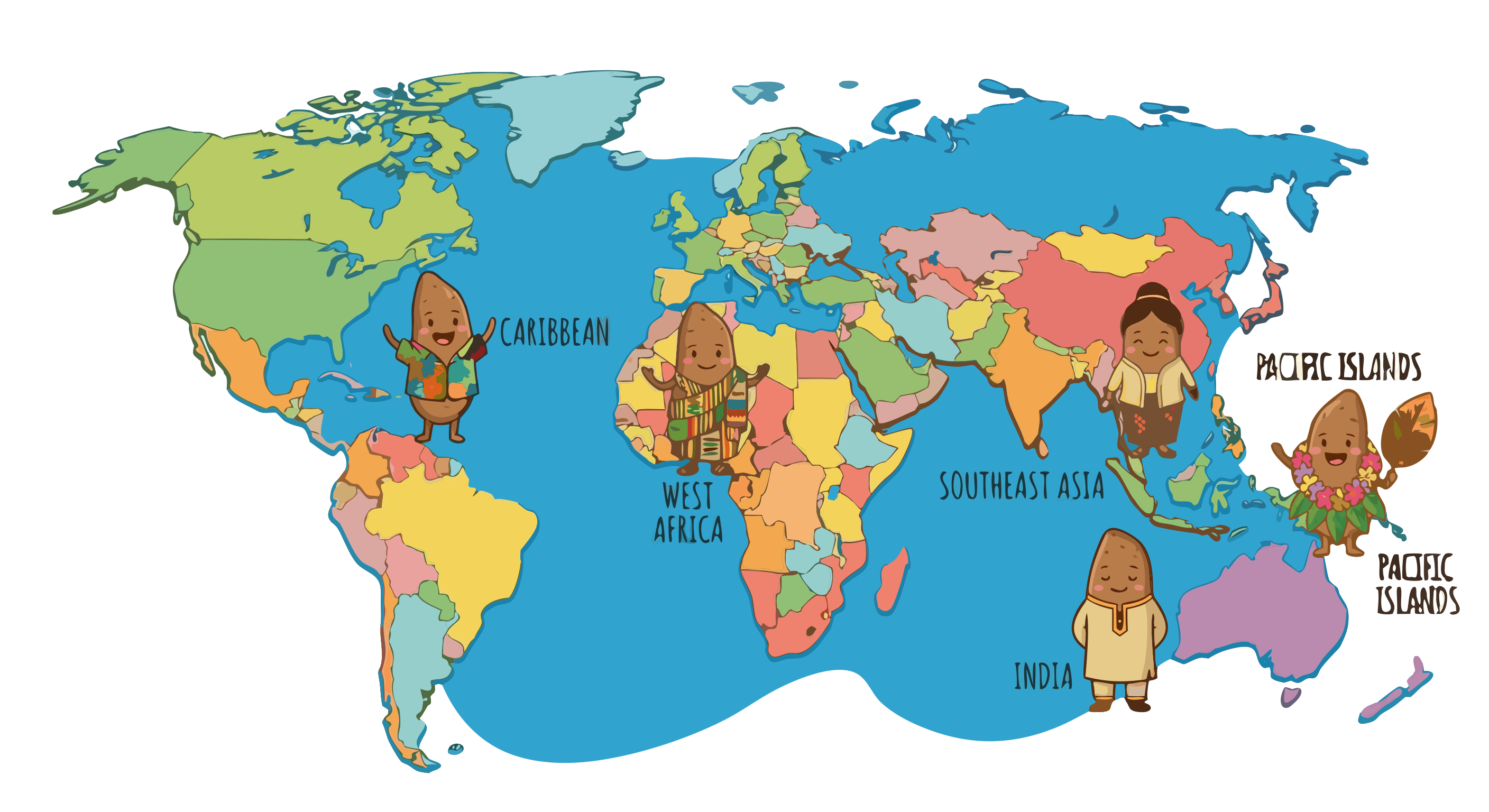
Dioscorea is a wide-ranging genus, but its major cultivated species still cluster around recognizable regional patterns. Region matters because it often predicts a yam’s farming system, culinary role, and any special handling concerns.
The West African Giants #
West Africa is the classic yam belt, so it makes sense to start with the species most closely tied to large-scale yam agriculture.
Key Information:
- The White Guinea yam (Dioscorea rotundata) is the most widely cultivated yam species in West Africa.
- The Yellow Guinea yam is known as Dioscorea cayenensis.
Asian Varieties and the “Winged” Yam #
Asia broadens the picture by showing how different regional priorities produce different standout species.
Key Information:
- Dioscorea alata is native to Asia and is known for its large size and purple-fleshed varieties.
- It is commonly called the “winged yam” due to wing-like ridges on its stems.
- The Water yam can produce tubers over 1 meter long.
Beyond the high-profile water yam, other Asian species show how varied the genus can be within a single broad region.
Key Information:
- The Chinese yam (Dioscorea polystachya) is also known as the “cinnamon vine.”
- The Lesser yam (Dioscorea esculenta) is identified by its small, clustered tubers.
The Caribbean and the Americas #
In the Americas, the regional story is smaller in scale but still distinctive.
Key Information: Dioscorea trifida is known as “cush-cush” in the Caribbean and is native to the Amazon region.
Unique Growth Habits and Safety #
A few species are most memorable not because of region alone, but because they break the ordinary yam pattern.
Key Information: Dioscorea bulbifera is known as the “air potato” or “aerial yam” due to its aerial growth habit.
Key Information: Dioscorea dumetorum is known as the bitter yam and requires special processing to remove toxins.
Seen together, these regional profiles do more than name species. They explain why identification, cultivation, and safe use all depend partly on where a yam comes from.




 Dioscorea rotundata (White Guinea yam)