

Section 4.3: Nutritional Profile and Health Properties #
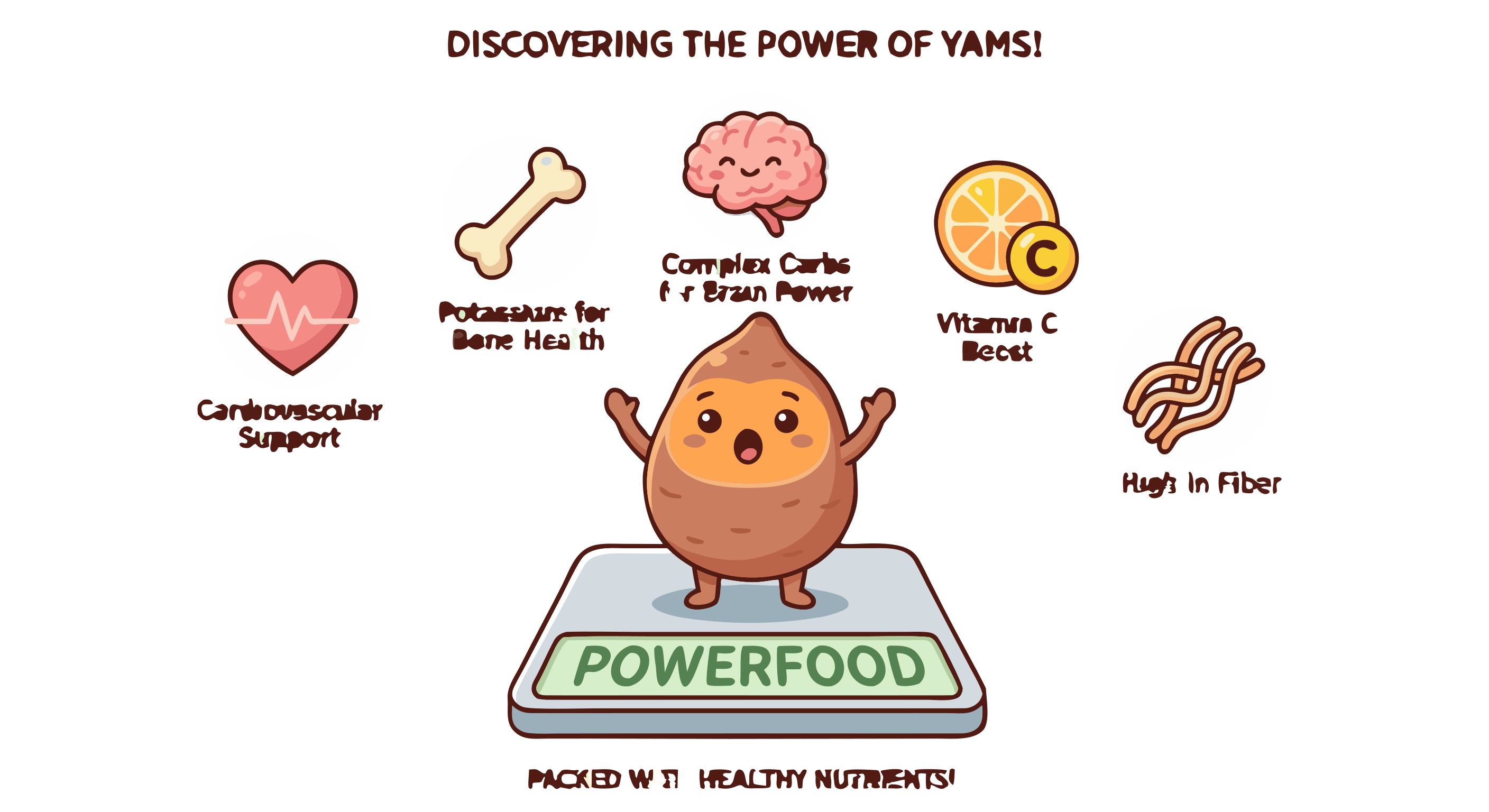
Yams are a vital food source for billions of people. Their value lies in being a reliable, storable, and energy-dense staple that has sustained agricultural societies across West Africa, the Caribbean, Southeast Asia, and the Pacific.
Macronutrients: The Energy Source #
The yam’s primary dietary role is providing energy through carbohydrates.
Key Information:
- The primary macronutrient in yams is carbohydrate , consisting mostly of amylose and amylopectin starch .
- Yams are very low in fat and provide about 1.5g to 2.5g of protein per 100g .
Calorie Comparison #
Yams are more calorie-dense than white potatoes, making them an excellent fuel source for physical labor.
Key Information: Yams have slightly more calories on average than white potatoes of equal weight .
Micronutrients and Vitamins #
Yams are rich in essential vitamins and minerals that support immune function and overall health.
Key Information: Vitamin C is found in significant amounts in most yams , which helps support immune system function .
They also offer a strong mineral profile, notably potassium and manganese.
Key Information:
- Yams are notably rich in potassium , which is vital for blood pressure regulation .
- Yams contain manganese, which supports bone health and metabolism .
Health Properties and Digestion #
Yams are a sophisticated choice for blood sugar management and digestive health.
Blood Sugar and Satiety #
With a lower glycemic index than many other starches, yams release energy slowly, avoiding spikes and crashes.
Key Information: Yams are a good choice for blood sugar management because they have a lower glycemic index than many other starchy foods .
Dietary fiber promotes regularity and increases satiety.
Key Information: Yams provide dietary fiber , which promotes digestive regularity .
- Yams provide high nutrient density , making them an effective part of a balanced diet.
Color and Nutrition #
Vibrant varieties like the purple yam (ube) contain anthocyanins—potent antioxidants that protect against oxidative stress.
Key Information: The distinctive purple color in yam comes from anthocyanins , potent antioxidants that contribute to the tuber’s overall health benefits.




 Carbohydrate