

Section 5.3: Defending the Crop #
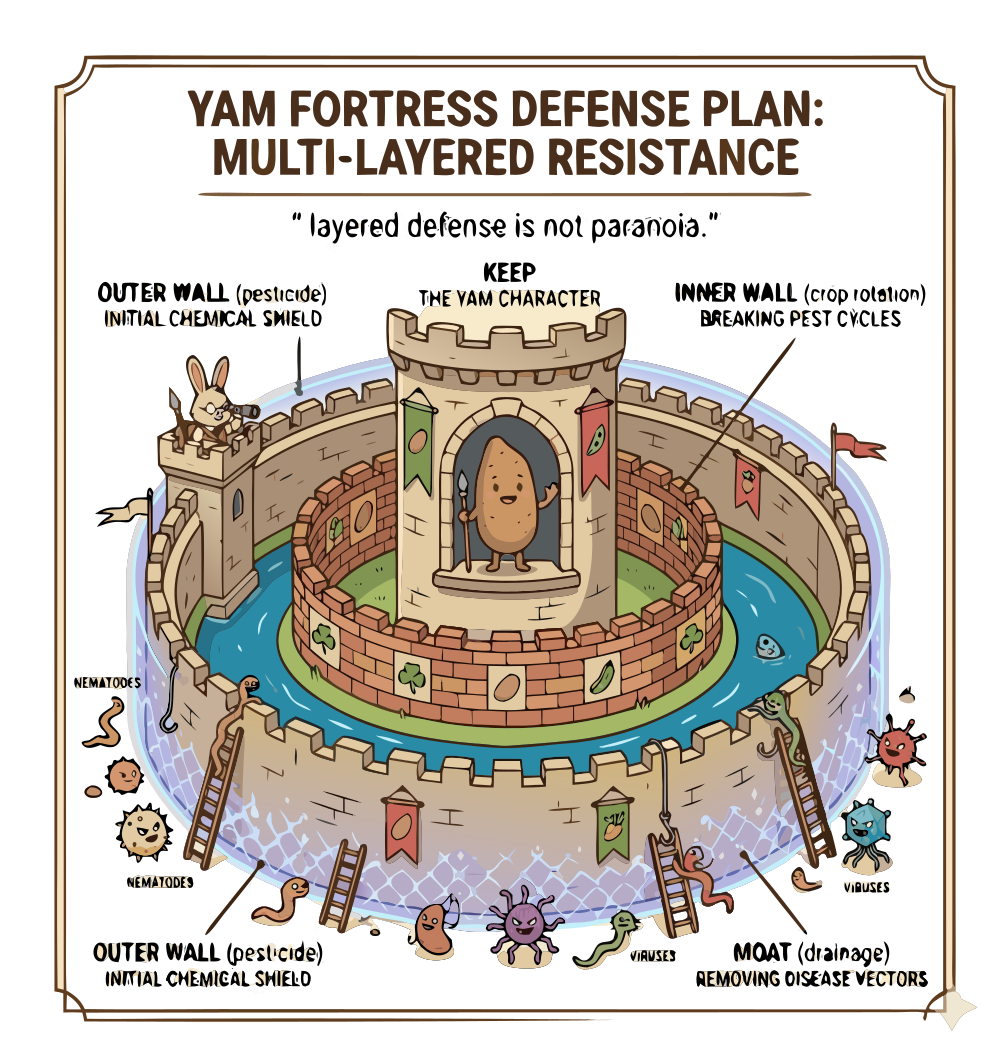
Yams are vulnerable to a variety of pests and diseases, many of which remain hidden beneath the soil. Protecting the crop relies on prevention and monitoring rather than just intervention. Layered defense is the best way to manage threats that are often difficult to detect before they cause significant damage.
The Invisible Enemies #
Microscopic worms known as nematodes attack yams in the soil. They are particularly dangerous because they can establish themselves inside the tuber, causing internal rot that may only become apparent after harvest.
Key Information: Yam nematodes (specifically Scutellonema bradys) are most commonly associated with dry rot disease of yam tubers.
Preventing nematode damage requires proactive management during the planting stage.
Key Information: Using clean planting material and crop rotation is the appropriate management approach for yam nematode prevention.
The Field Pests #
Underground yam beetles are a significant threat. They bore into tubers, leaving holes that can lead to rot and make the crop unmarketable.
Key Information: Yam beetles (Heteroligus spp.) are field pests that can cause significant losses by boring into tubers underground.
Cultural practices are the most effective way to manage beetle populations.
Key Information: Crop rotation and field sanitation is the most effective cultural practice to manage yam beetles.
Fungal and Viral Threats #
Diseases also attack the vine. Fungi can cause anthracnose, characterized by dark spots and tip wither, while viruses can spread quickly through a field.
Key Information: Black leaf spots and dieback are the primary symptoms of anthracnose disease in yams.
The Yam Mosaic Virus is especially concerning because of its potential to devastate entire crops.
Key Information: Yam mosaic virus is considered the most damaging virus to yam crops.
Sustainable Defenses #
Effective protection comes from combining multiple methods. Integrated Pest Management (IPM) focuses on sustainable cultural controls rather than relying solely on chemicals. Resistant varieties provide an inherent baseline of protection.
Key Information: Using resistant varieties combined with cultural controls is an integrated pest management technique for controlling yam diseases.
This approach balances environmental impact with economic feasibility. While some traditional practices like intercropping or using wood ash are effective, others—like planting by lunar cycles—do not impact pests.
Key Information: Planting during a full moon is NOT an effective traditional practice for managing yam pests.
Key Information: Integrated disease management using resistant varieties and cultural practices is the most environmentally sustainable approach to yam disease management.
Storage Security #
Defense continues after harvest. Fungi like Lasiodiplodia theobromae cause soft rot in storage, and other species can quickly colonize tubers.
Key Information: Lasiodiplodia theobromae (syn. Botryodiplodia theobromae) is the fungal pathogen that causes storage rot (soft rot) in yam tubers.
Cleaning and monitoring storage areas is the final step in securing the harvest.
Key Information: Penicillium, Fusarium, and Aspergillus species are fungi that cause tuber rot during yam storage.




 Scutellonema bradys