

Section 7.1: Working Safely with Yams #
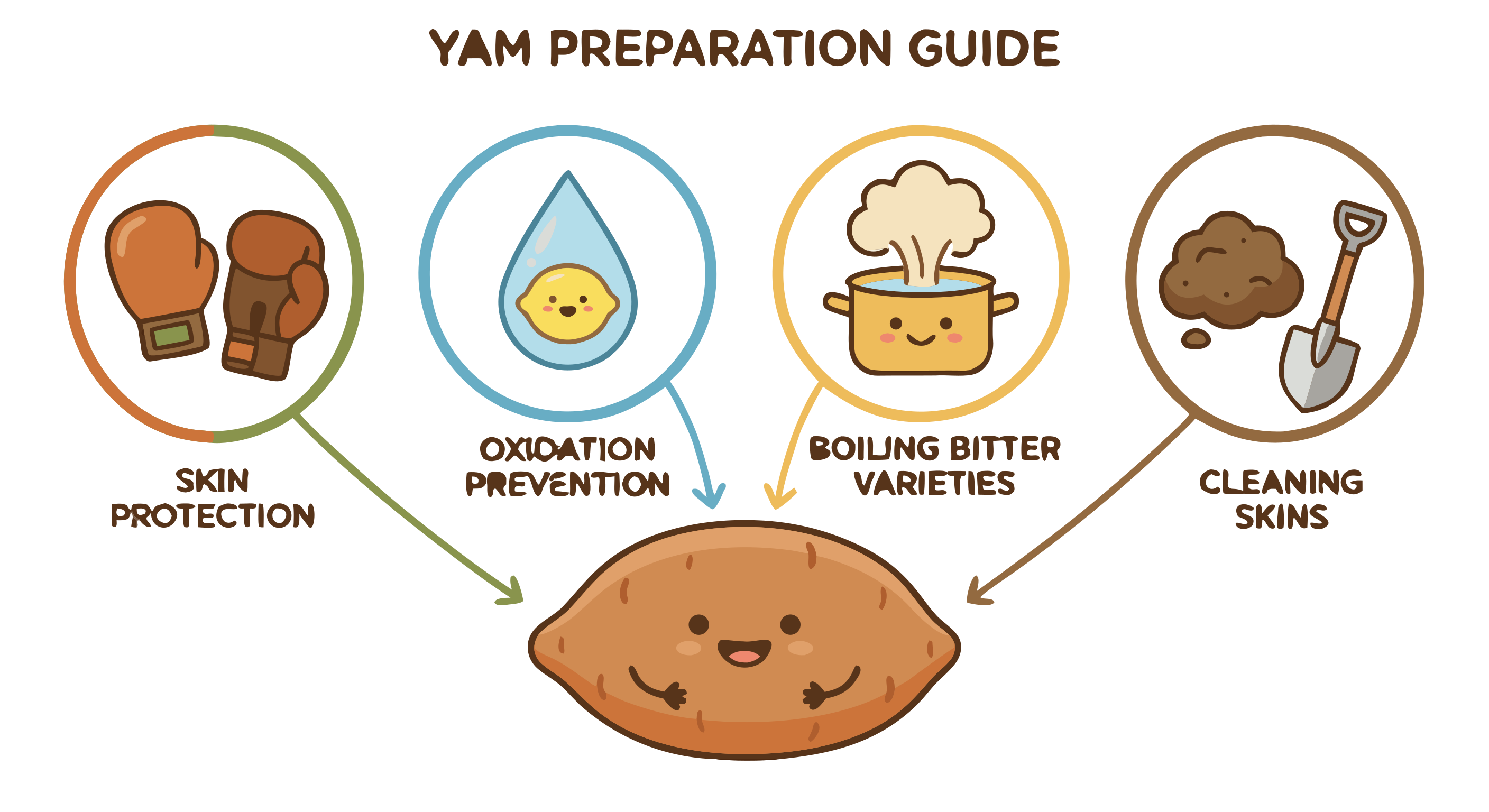
Proper preparation makes yams safe to eat and visually appealing. Correct handling addresses cleaning, skin protection, oxidation control, and toxin removal.
Key Information: Peeling and cleaning is the first step in preparing most yam dishes.
Protecting Your Skin #
Certain yam varieties contain calcium oxalate crystals. These microscopic, needle-shaped structures can cause significant skin irritation.
Key Information: Gloves should be worn when peeling some varieties of yams because they may cause skin irritation due to calcium oxalate crystals.
Preventing Oxidation #
Once peeled, yam flesh reacts quickly with the air. This enzymatic browning or oxidation can discolor the tuber within minutes.
Key Information: After peeling but before cooking, yams should be stored in cool water with lemon juice or vinegar to prevent browning.
Adding a small amount of acid, like lemon juice, slows the enzyme activity while you finish preparation.
Handling Bitter Varieties #
Some species, such as Dioscorea dumetorum, contain toxic compounds that must be neutralized.
Key Information:
- Bitter varieties of yam require special processing to remove toxic compounds and make them safe for consumption.
- A common precaution when preparing bitter varieties is extended boiling with multiple water changes to leach out the toxins.
Changing the boiling water several times gradually removes these water-soluble toxins.
Cleaning the Skins #
When cooking yams with the skin intact—common for roasting—thorough cleaning is essential.
Key Information: When preparing yams with their skins, the skins should be thoroughly cleaned to remove soil contaminants.




 Peeling and cleaning